
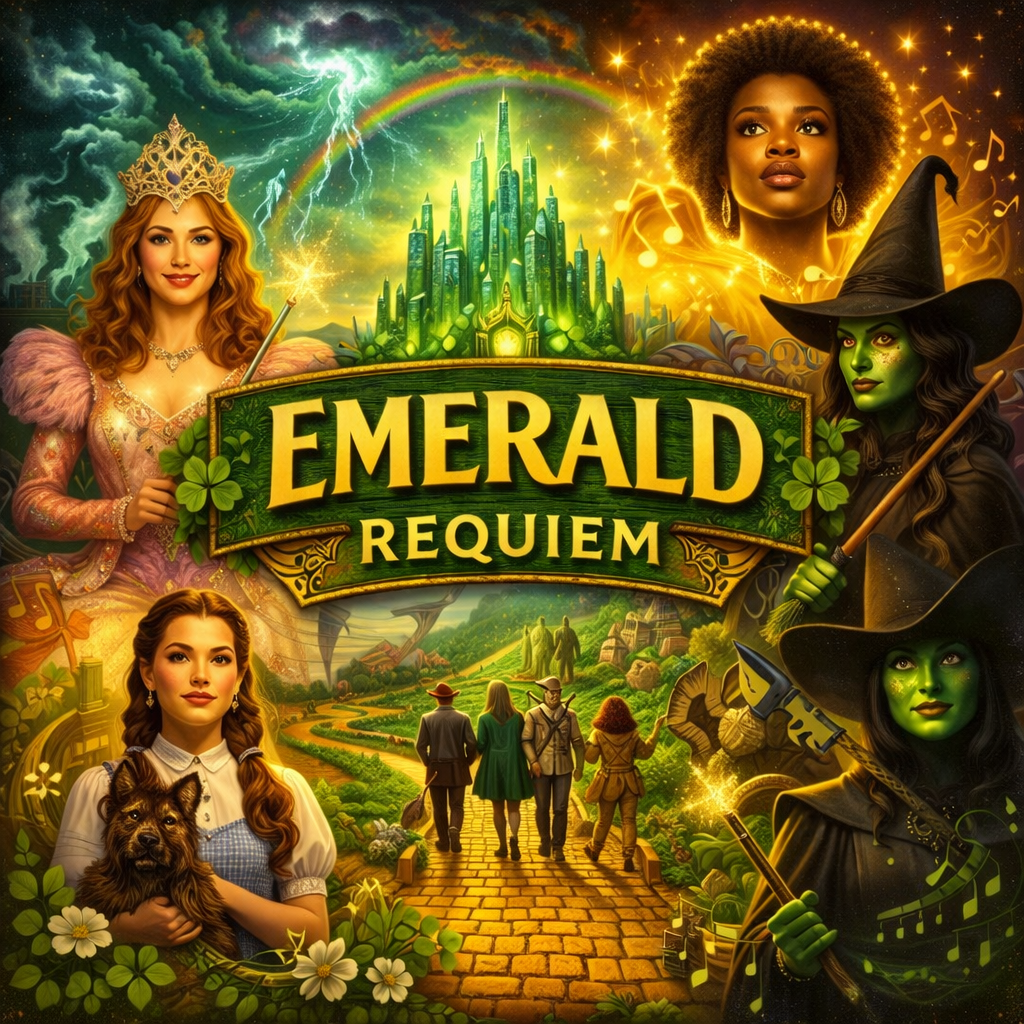
Emerald Requiem — Wizard of Oz, The Wiz, Wicked
Arr: The Tatted Violinist
Emerald Requiem is not just a musical arrangement—it is shaped by lived experience, belief, and advocacy.
The way this piece was composed and arranged was directly influenced by Marcos’s stance on LGBTQ+ rights, immigration, and his role as an advocate. Those perspectives are not inserted as statements or speeches—they are embedded into the structure of the music itself. The tension you hear, the shifts in tone, the moments of resistance and release—those are reflections of real-world experiences. The feeling of being unseen, of being told where you belong, of navigating systems that weren’t built with you in mind. And more importantly, the feeling of pushing through that and redefining your place within it.
That is why this piece matters beyond the notes. It carries intention.
Behind Marcos, the visual storytelling was designed to support this without ever overpowering him. The imagery did not tell a literal story—it told a parallel one. A story of oppression, struggle, and ultimately, progress.
The visuals moved through moments that echoed history without anchoring to a single narrative. They reflected themes of control, restriction, and societal pressure—things that have impacted many communities, including LGBTQ+ individuals and immigrants. There were visual callbacks to historical struggles, civil rights movements, and moments where systems of power dictated who could belong and who could not.
But the intention was never to leave the audience in that place.
As the music evolved, so did the imagery. What began as heavy, restrictive, and controlled slowly shifted into something more open. The visuals began to break, to expand, to lift—mirroring the arc of the music and the journey being told. By the time Defying Gravity arrived, the story had transformed. What once felt confined now felt limitless.
This was intentional.
Because Emerald Requiem is not about highlighting oppression for the sake of it. It is about recognizing it, understanding it, and then moving beyond it. It is about the victories—both collective and personal—that come from challenging systems, finding identity, and claiming space in the world.
Marcos stands at the center of that story—not as a narrator, but as a living embodiment of it. His presence grounds the piece in something real. The music, the visuals, and the performance all work together to create something that is not just seen or heard, but felt.
And just like Unbound itself, the story is not his alone.
It belongs to anyone who has ever questioned where they fit, who has ever pushed against limitation, and who has ever realized that the rules they were given did not have to define them.
Not everything that glitters is freedom—
some things are only beautiful cages.Marcos Aycox